Guidance from the National Protective Security Authority (NPSA) indicates that permanent hostile vehicle mitigation is generally the preferred long-term solution to protect people in outdoor spaces where people routinely gather or circulate, such as public realm squares, markets and pedestrianised areas.
The most efficient and cost-effective approach to enhancing the security of public realm locations with proportionate, permanent HVM measures is to consider threat vulnerability and risk as part of the design process for any public realm development projects. That’s exactly what has happened at a current project in a market town, where SAFECROWDS GROUP were involved at a very early stage of the design phase to carry out a Threat, Vulnerability & Risk Assessment (TVRA), including a Vehicle Dynamics Assessment (VDA). Our TVRA and VDA enabled us to make recommendations that are being incorporated into a major public realm regeneration project.
A public realm for all
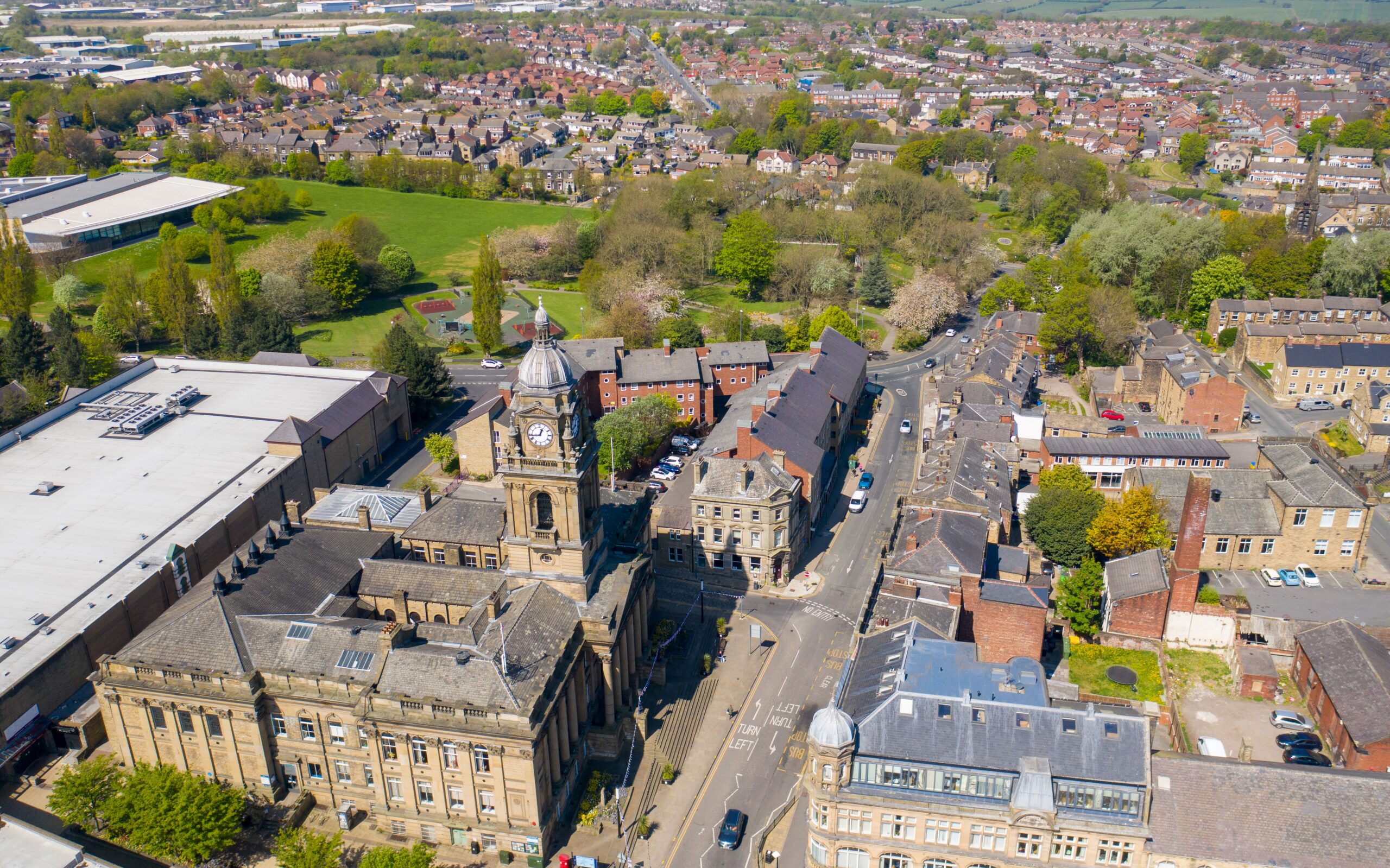
The regeneration project aims to enhance this typical Victorian market town, enabling its market square to become a space that brings people together, not only for markets, but also for shows and events.
In addition, the plans include closing a road leading away from the market square to traffic, creating a pedestrianised shopping street.
Our brief was to consider public safety and the protective security principles reflected within the Terrorism (Protection of Premises) Act (Martyn’s Law), as part of a TVRA that assessed Vehicle as a Weapon (VaW) threats, vehicle borne threats, and wider protective security considerations. We were then able to report back on our findings to recommend a hostile vehicle mitigation strategy, along with suggestions for HVM barriers, and other security enhancements.
A collaborative approach
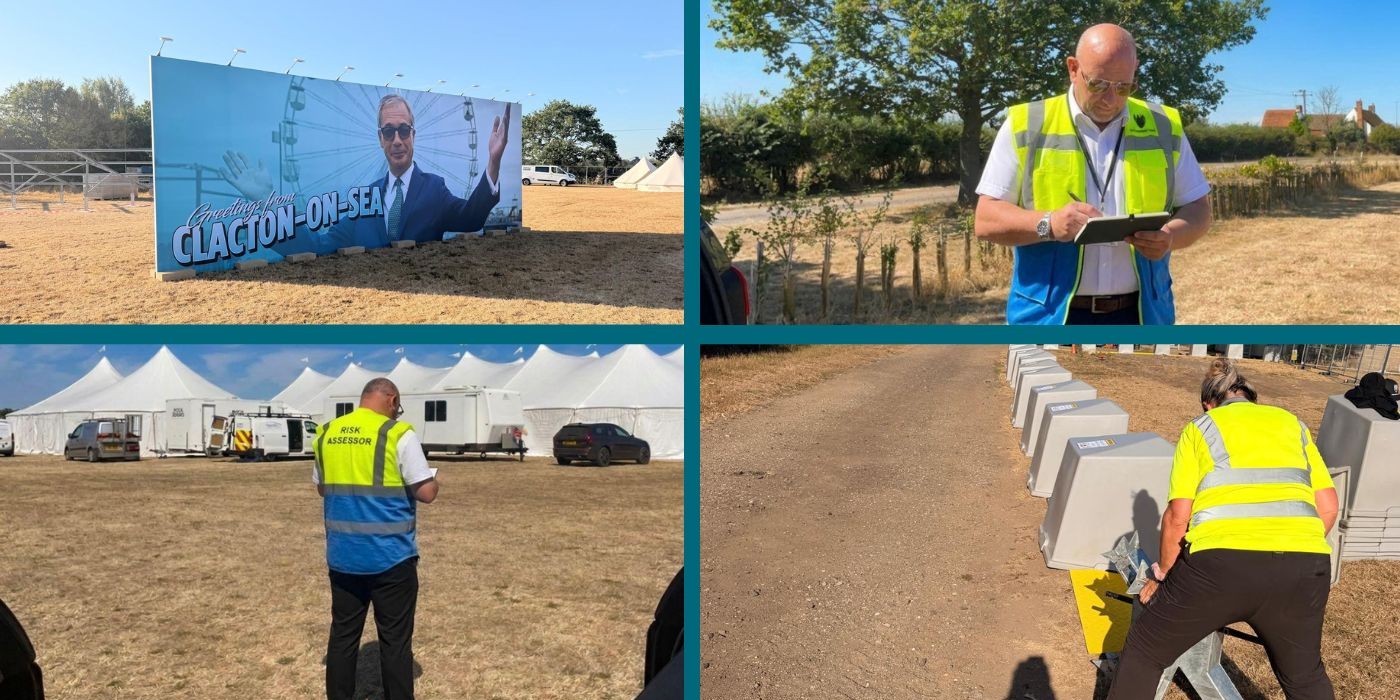
Specialists from our qualified counter terrorism team visited the town to carry out the TVRA and VDA, working with the local police counter terrorism security advisor (CTSA), the council, the architects, and our crowd management professionals to gather a full understanding of the specific risk profile of the location. Carrying out a Vehicle Dynamics Assessment (VDA) alongside the TVRA ensured that engineering analysis, rather than assumption, underpinned our recommendations .
Alongside the security considerations involved in our TVRA, we also focused on operational criteria. Any HVM designed into the public realm needs to be viable for all stakeholders and enable safe crowd flows during busy periods. It was clear from the VDA that appropriately rated bollards would be required for both the market square and to limit vehicle access to the pedestrianised road.
Our report provided detailed recommendations on the required crash performance, barrier classification, permissible penetration distance and the most appropriate type of permanent hostile vehicle mitigation for each location. By combining the findings of the Threat, Vulnerability & Risk Assessment (TVRA) with the Vehicle Dynamics Assessment (VDA), we were able to recommend different performance-rated barriers for specific locations around the market square, ensuring that each installation was proportionate to the assessed risk. This enabled the project team to specify a permanent HVM solution that satisfied the required protective security outcomes whilst remaining operationally practical and commercially efficient, avoiding unnecessary expenditure where lower-rated solutions were appropriate without compromising safety or resilience.
Cost considerations were also factored into our recommendations, to ensure that our approach did not focus exclusively on the capital investment required to install hostile vehicle mitigation measures in the town centre, but also looked ahead to the operational costs of different systems. This was an important element of our proposals because, while the regeneration project has secured external funding, the ongoing maintenance and operational costs of the HVM measures will remain the responsibility of the local authority.
Finally, our recommendations also needed to consider the aesthetics and heritage of the location. The market square is not only at the heart of the town, but also part of the town’s 19th century character. For this reason, we suggested that the HVM be finished with black shrouds to resemble traditional cast iron.
By engaging at the design stage, security requirements could be integrated into the wider public realm scheme, avoiding costly redesigns and ensuring that safety, accessibility, operational functionality and aesthetics were considered together rather than in isolation.
Looking Beyond Hostile Vehicle Mitigation
As always, our TVRA and recommendations went above and beyond hostile vehicle mitigation to consider the town centre’s complete risk profile.
We considered the parking locations and dwell time, the impact on traffic movements and pedestrian footfall, and the location for CCTV cameras, lighting and street furniture to mitigate risk across the area earmarked for redevelopment.
As the design phase continues, we look forward to continuing to support the project team as the proposals move towards delivery, helping to create a public space that is welcoming, accessible and resilient, and allows people to go about their daily lives with greater confidence.